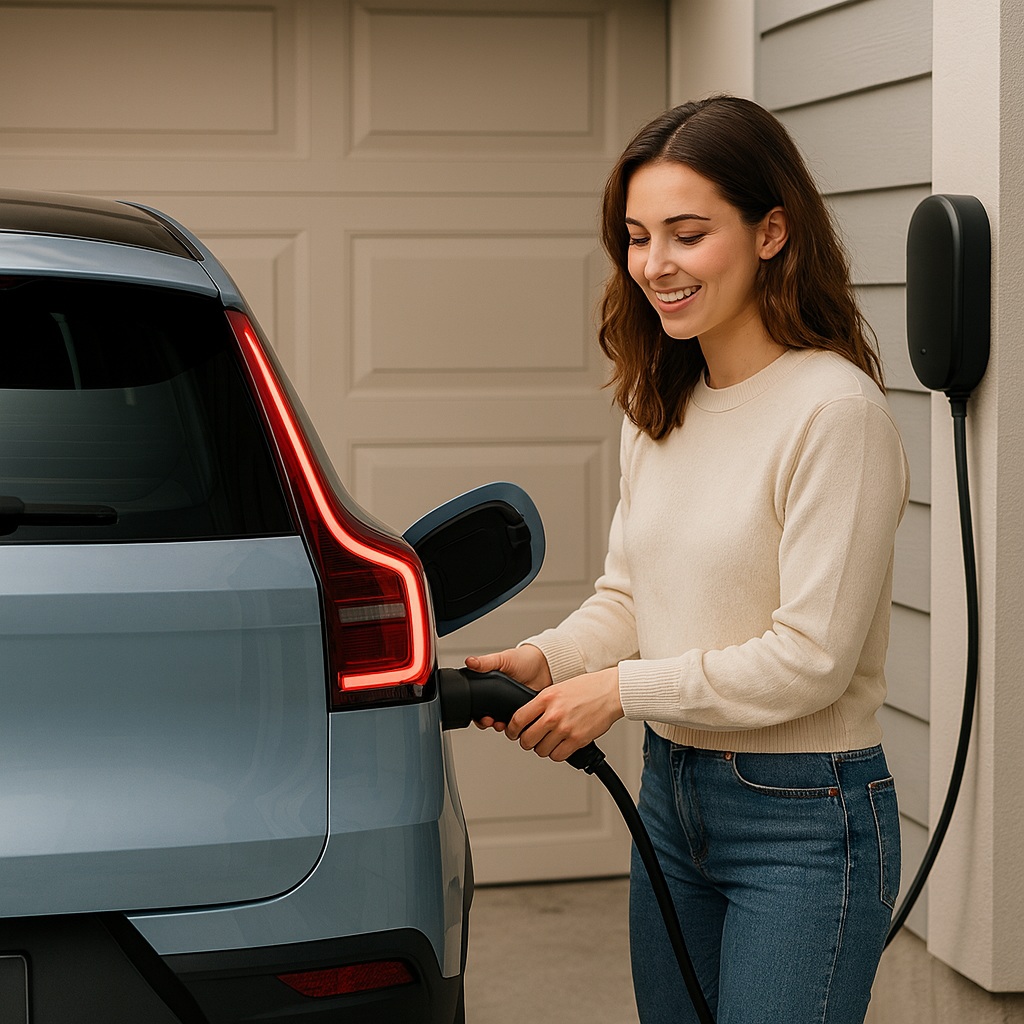
Electric vehicle ownership in South Africa is growing quickly, but home charging is still new territory for many drivers. More EVs and plug-in hybrids are entering the local market, and many buyers now receive a charger, portable cable or charging bundle as part of the vehicle purchase.
At first glance that sounds simple: buy the vehicle, mount the wallbox, plug in and charge. In some very straightforward homes, that may be close to the truth. In many real South African installations, however, the charger is only one part of a larger electrical and energy-management picture.
The charger is not the whole solution
A standard wallbox can supply power to the vehicle, but it may not understand what is happening elsewhere in the property. It may not know when the house load is high, whether the inverter is under pressure, how much spare supply is available, or whether solar and battery systems should influence charging behaviour.
That does not make every standard charger bad. It simply means the installation needs to be assessed properly before the charger is treated as a plug-and-play appliance.
EV charging is a high-load application
A typical 7 kW single-phase EV charger can draw up to 32 amps for long periods. That is very different from many household appliances that cycle on and off. Continuous charging places sustained demand on cables, terminals, breakers, distribution boards and the available supply to the property.
Competent electrical workmanship is essential. EV charging also benefits from charger-specific assessment: the vehicle's onboard charger limits, the route and distance of the cable run, protection requirements, main supply capacity, solar or inverter behaviour, and the way the customer actually drives and charges.
Common risks when the assessment is skipped
A charger that appears to work on day one can still create problems if the supporting installation is not designed correctly. Common issues include nuisance tripping, overloaded circuits, undersized cable routes, inadequate protection, poor surge planning, limited upgrade options and incomplete compliance documentation.
The goal is not to make EV charging sound intimidating. The goal is to make it safe, practical and ready for daily use.
Standard wallbox vs smart EV charger
| Feature | Standard wallbox charger | Smart EV charger |
|---|---|---|
| Primary role | Supplies power to the vehicle at a fixed or manually limited rate. | Can form part of a wider home or site energy-management approach. |
| Current control | Often limited to fixed settings or manual adjustment. | May support adjustable current limits, schedules and remote control features. |
| Load awareness | Usually does not respond to changing household demand. | May support dynamic or adaptive load management where the charger and site setup allow it. |
| Solar integration | May charge from available power but usually has limited solar intelligence. | Can be better suited to solar-aware charging, inverter limits and battery considerations. |
| User control | Basic charging with fewer reporting or app-based features. | May include app control, time-of-use scheduling, session data and remote start or stop. |
What smart charging can add
Smart charging is not only about charging faster. In many homes, the more valuable benefit is control. Depending on the charger and installation, smart features can include timer-based charging, time-of-use scheduling, adjustable current settings, remote start and stop, charging history, app monitoring and better coordination with the property's available capacity.
In more advanced setups, smart chargers may also support dynamic load management or adaptive load management. These functions can help charging respond more intelligently to real-time site conditions, but they must be matched to the correct equipment, wiring, protection and energy system.
When a standard charger may be enough
A standard wallbox can be a reasonable option where the home has enough spare electrical capacity, the customer only needs simple grid charging, there is no solar or inverter coordination requirement, and the driver is comfortable managing charge limits manually through the vehicle.
Even then, the installation still needs to be done correctly. A basic charger does not mean basic wiring.
Assess first, install second
The best charging decision starts with a proper site assessment. Before hardware is selected or installed, it helps to understand the vehicle's AC charging limit, the customer's daily driving needs, the main supply capacity, the distribution board condition, cable route, protection requirements, solar or inverter behaviour and any property rules that may apply.
Sometimes a dealership-supplied charger can be installed safely and practically. Sometimes a smart charger is the better long-term choice. In other cases, the right answer may be to install a standard charger now while preparing the infrastructure for an easier smart upgrade later.
Build the charging setup around real life
A charger should match the vehicle, the property and the way the customer will actually use it. For South African homes, businesses, complexes and estates, that means thinking beyond the wallbox itself and looking at safety, compliance, cost, solar behaviour, load management and future growth.
NevGridSolutions helps customers understand these choices before they commit to the wrong equipment or an installation that cannot grow with them.
Need help choosing or installing an EV charger?
We can assess your supply, charger, solar or inverter setup and recommend a practical way forward.